
The Linguistic Legacy of Jesus and Palestinian Christians:
A Personal Perspective.
Introduction.
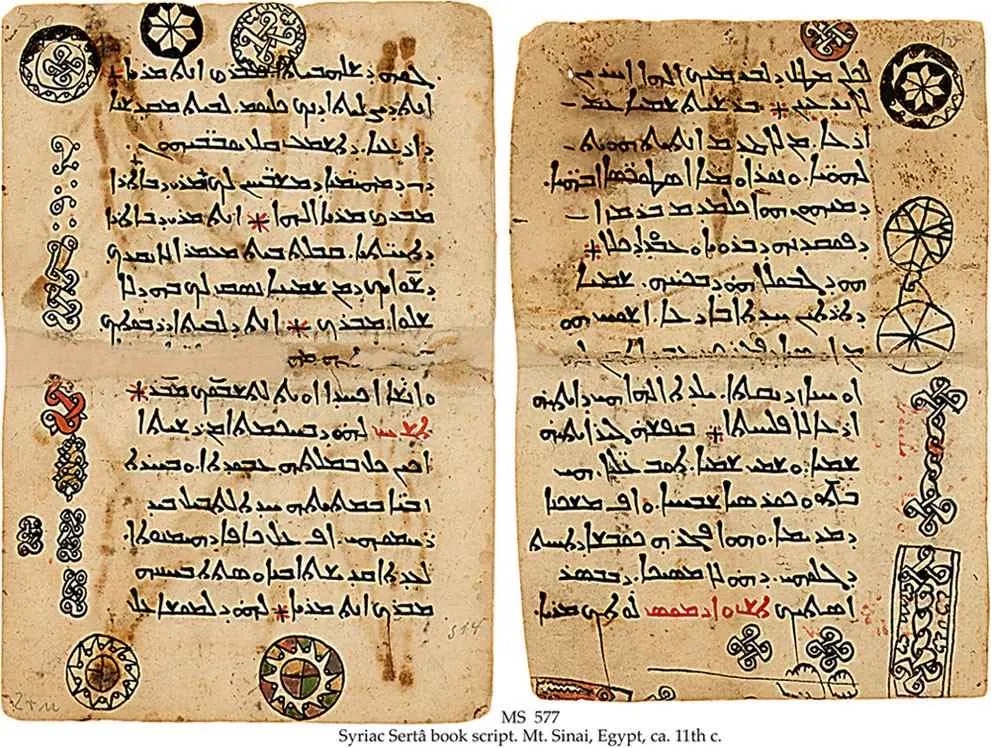
As someone deeply interested in the historical and linguistic aspects of religion, I’ve often pondered about the language spoken by Jesus. Scholars and historians widely accept that Jesus primarily spoke Aramaic, a Semitic language closely related to Hebrew12. This language, in its various dialects, was the common tongue of the Middle East during Jesus’s time1.
Aramaic and the Orthodox Church.
What fascinates me is that Aramaic, specifically the Syriac dialect, is still used in the liturgy of many Orthodox Churches, including those in Palestine345. The Syriac Orthodox Church, which includes the Palestinian Orthodox Church, uses Syriac in their liturgy345. While Syriac remains the official religious language, many services today are conducted in Arabic, the vernacular language4.

“Mar Sabor and Mar Proth East Syriac Persian Saints of the Malabar Church” by Achayan is licensed under CC BY-SA 4.0 

 .
.
The Connection to Jesus.
Given this linguistic connection, I believe that Palestinian Christians, who participate in services conducted in a language akin to that spoken by Jesus, share a unique bond with the historical figure of Jesus. This bond is not merely religious or spiritual, but also cultural and linguistic16.
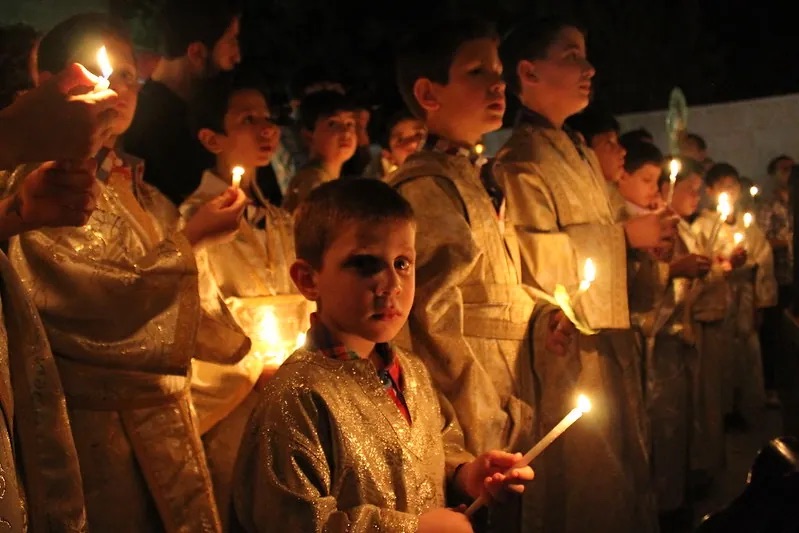
“Palestinian Christians welcome Easter to Gaza” by joegaza is licensed under CC BY-NC 2.0  .
.
Reflections on Christian Zionism.
I’ve given some thought to the concept of Christian Zionism, a belief among some Christians that the return of the Jews to the Holy Land and the establishment of the State of Israel in 1948 is in accordance with Biblical prophecy78. Perspectives on Christian Zionism can vary widely among Christians worldwide78.
However, I propose that those who identify as Christian Zionists should consider the cultural and linguistic ties that Palestinian Christians have with Jesus. Recognizing these ties might foster greater empathy and understanding towards Palestinian Christians9.
Conclusion.
In conclusion, the linguistic legacy of Jesus, as preserved in the liturgical practices of Palestinian Christians, serves as a powerful reminder of the historical and cultural dimensions of faith. It invites all Christians, regardless of their political beliefs, to reflect on the rich tapestry of Christian tradition and the diverse communities that continue to uphold it16.
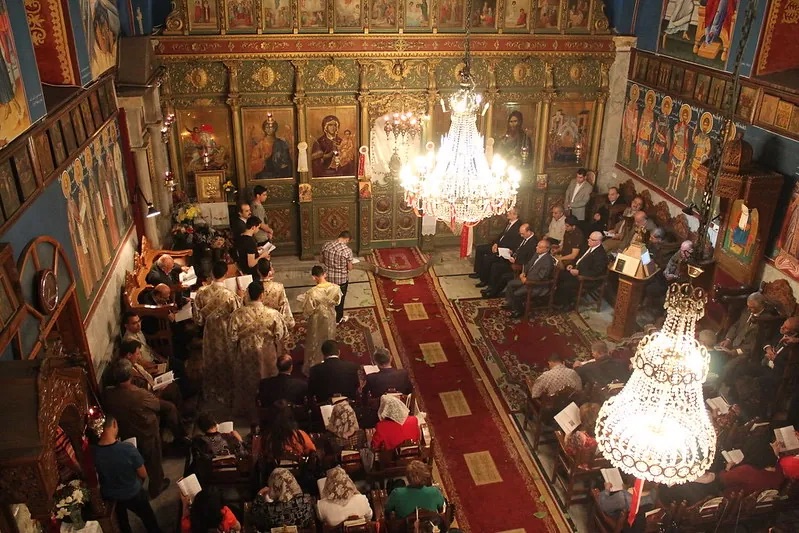
“Palestinian Christians welcome Easter to Gaza” by joegaza is licensed under CC BY-NC 2.0 .
References:
- Tresham, Aaron. “THE LANGUAGES SPOKEN BY JESUS.” The Master’s Seminary, 2021, https://tms.edu/wp-content/uploads/2021/09/tmsj20e.pdf.
- “Language of Jesus – Wikipedia.” Wikipedia, 2023, https://en.wikipedia.org/wiki/Language_of_Jesus.
- “Syriac Liturgy | syri.ac.” syri.ac, 2023, https://syri.ac/brock/liturgy.
- “Worship in the Syriac Orthodox Church.” Syriac Orthodox Resources, 2023, https://syriacorthodoxresources.org/Worship/index.html.
- “Syriac Orthodox Church – Wikiwand.” Wikiwand, 2023, https://www.wikiwand.com/en/Syriac_Orthodox_Church.
- Fassberg, Steven E. “Which Semitic Language Did Jesus and Other Contemporary Jews Speak?” JSTOR, 2023, https://www.jstor.org/stable/43727847.
- “A Call for Repentance: An Open Letter from Palestinian Christians to Western Church Leaders and Theologians.” Sabeel, Ecumenical Liberation Theology Center, 2023, https://sabeel.org/a-call-for-repentance-an-open-letter-from-palestinian-christians-to-western-church-leaders-and-theologians/.
- Goldman, Shalom L. “Christians and Zionism.” JSTOR, 2023, https://www.jstor.org/stable/23887380.
- Lewis, Donald M. “The Origins of Christian Zionism.” Cambridge University Press & Assessment, 2023, https://assets.cambridge.org/97805215/15184/frontmatter/9780521515184_frontmatter.pdf.

 MY HOME PLANET TERRA