

UN Condemns?—Really?
United Nations Secretary-General Antonio Guterres has “strongly condemned” an attack on the city of Donetsk. But why did he decline to assign blame for the shelling that tragically claimed the lives of at least 27 civilians and left over two dozen injured, including several children?
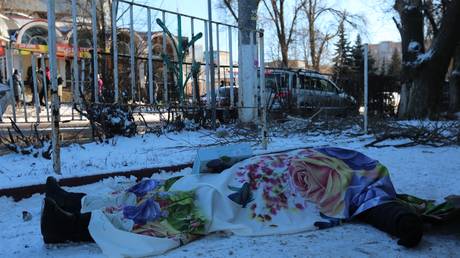
The city of Donetsk, now part of Russia since September 2022 but still claimed by Ukraine, is situated just 20 km (12 miles) away from the conflict frontline.
In a brief statement on Sunday night, the spokesperson for the UN chief emphasized, “The Secretary-General strongly condemns all attacks against civilians and civilian infrastructure, including today’s shelling of the city of Donetsk in Ukraine.” The statement went on and on to stress that such attacks are prohibited under international humanitarian law, and are “completely unacceptable”, and “must cease immediately.”
The latest update on casualties from the Ukrainian shelling of a bustling market in Donetsk on Sunday reports that 27 people have tragically lost their lives. An additional 25 individuals were injured, with some in serious condition, suffering from “penetrating wounds in the area of vital organs and traumatic amputation of limbs.” Two children wounded in the bombardment are in a moderate condition.
Moscow has called upon governments and international bodies to condemn what it refers to as a “treacherous attack on the civilian population.” Russia’s Foreign Ministry has stated that failure to do so would indicate “silent approval of the murders of civilians” and could potentially encourage further violent actions by Kiev.
The shelling of Donetsk, which struck the Kirov District in the southwest of the city, involved the use of 152mm and NATO-standard 155mm munitions. Moscow has asserted that this indicates the direct involvement of Western nations in the conflict, implicating them in the actions of the Zelensky regime and its alleged inhumanity towards innocent people.
Questioning UN’s Impartiality: A Call for Transparency and Fairness in the Face of Tragedy
In the wake of the recent tragic attack on Donetsk, the heart-wrenching loss of life in Donetsk is a stark reminder of the urgent need for accountability and justice. I find it odd that United Nations Secretary-General Antonio Guterres condemns the incident while at the same time refusing to assign blame for the devastating shelling that claimed the lives of at least 27 civilians, including innocent children1. I want to believe that Mr. Guterres is being genuine. However, as they say, actions, speak louder than words. If Guterres does have biases against Russia, this isn’t the first time we’ve seen it. Let’s not forget about Russia’s concerns about Ukraine’s bioweapons, and how they were simply tossed away.
On March 11, 2022, Konstantin Kosachev presented substantial evidence supporting Russia’s assertions concerning bacteriological experiments in Ukraine, backed by blood samples from captured Ukrainian servicemen. This evidence included blood samples revealing elevated levels of substances associated with rare diseases, suggesting the possibility of offensive experiments. Russia also highlighted its law on biological safety, emphasizing the importance of national catalogs to protect against biological threats.2
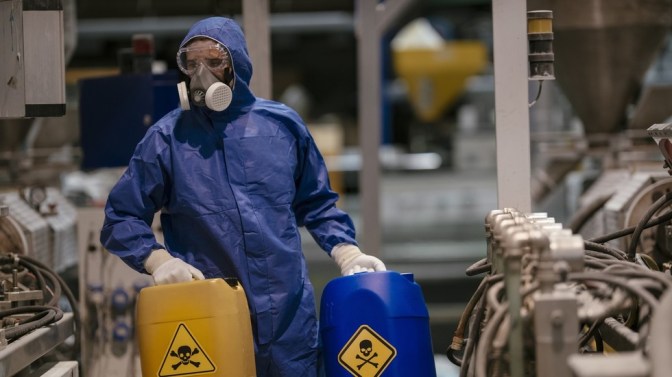
Then again, on October 25th, 2022, Russia called on the UN Security Council to initiate an investigation into violations of the Biological Weapons Convention by Ukraine and the United States. Despite Russia’s request for an inquiry, the UN, including Secretary-General António Guterres, maintained that there was “no evidence of biological weapons in Ukraine.” As usual, this position was based on their mandate and “limited capacity for an independent investigation.”3
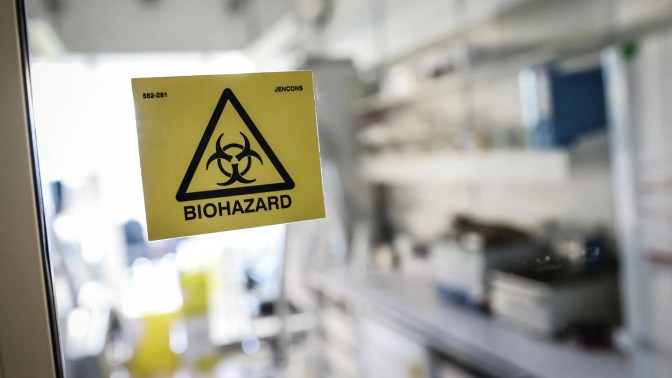
Then again, on October 27th, 2022, the UN, led by Secretary-General António Guterres, maintained a resolute position and repeated that there was “no evidence of biological weapons in Ukraine”, despite Russia’s persistent claims. Skepticism arises when considering the UN’s response, given their self-imposed constraints due to what they call “limited technical and operational capabilities”, by their mandate. In the context of concerns about biases against Russia, this raises more profound questions about whether the UN’s stance was driven by genuine limitations or if it inadvertently contributed to the bias.4
Once again, on January 30, 2023, Russia’s Defense Ministry presented documents indicating that US-funded laboratories had conducted research on Ukrainian military personnel, with the involvement of individuals linked to Hunter Biden. Russia had previously submitted a complaint to the UN regarding these activities, but the Security Council rejected the proposal. These developments raise legitimate questions about how the UN has handled this situation.5
Furthermore, on November 4th, 2023, Russia raised concerns about the United States conducting research near Russia’s borders, supported by over 2,000 documents. Notably, the United States did not dispute these facts.6
As though fallen on deaf ears, as of today, it appears that the UN has not adequately addressed Russia’s concerns regarding Ukraine’s biological weapons program. While it is essential to uphold neutrality and objectivity, shouldn’t the UN have considered a more thorough investigation into Russia’s claims, given the mounting evidence? Has the UN, under Antonio Guterres’ leadership, overlooked Russia’s complaints regarding Ukraine’s development of biological weapons? Recent developments surrounding Russia’s claims have sparked concerns about potential bias within the United Nations (UN). It raises questions about the fairness and objectivity of the UN toward Russia.
Isn’t ensuring transparency and accountability in matters of international security vital to maintaining trust and credibility? Isn’t it in the UN’s interest to address these concerns and demonstrate its commitment to fairness and justice on the global stage?
As the UN leader, Guterres holds a significant responsibility for maintaining the organization’s integrity and impartiality. Therefore, the international community must scrutinize the UN’s response to Russia’s claims and question whether these actions truly serve the cause of global security and justice or if there are ulterior motives that need to be uncovered.
It is difficult to ignore a sense of skepticism regarding Secretary-General António Guterres’ recent acknowledgment of Ukraine’s alleged wrongdoing. Questions arise about the timing and underlying motives behind this acknowledgment. Has it been driven by a genuine commitment to transparency and accountability, or is there a deeper political agenda at play?
In today’s interconnected world, political correctness seems to be given the highest priority, but what about fairness? I firmly believe that it’s time for the international community to demand transparency, neutrality, and a commitment to fairness that leaves no room for biases or political agendas.
In this case, while the UN calls for an end to attacks on civilians and civilian infrastructure, it’s crucial that they also address the issue of neutrality and fairness to ensure that their actions align with their words. Let’s hope that the UN can reevaluate its stance and work towards a more balanced approach that truly represents the interests of all nations and prioritizes the protection of innocent lives.
References:
- “At least 27 Killed in Ukraine Shelling Attack on Russian-controlled city of Donetsk: Report” ↩︎
- “Kiev Conducted Experiments ‘With Extremely Dangerous Diseases’ in Ukraine: Russian MP” ↩︎
- “Moscow urges UN probe into Ukrainian biolabs” ↩︎
- “UN still sees no sign of biological weapons in Ukraine” ↩︎
- “Moscow provides more evidence of US biolabs in Ukraine” ↩︎
- “US Creating Biological Weapon Components Near Russia’s Borders: Russian Defense Ministry” ↩︎

 MY HOME PLANET TERRA