
Soviet Proposal to Join NATO:
A Historic Bid for Peace
On March 31, 1954, Soviet Foreign Minister Vyacheslav Molotov proposed that the USSR join NATO, aiming to end the Cold War tensions in Europe. This surprising move was part of the USSR’s broader efforts to recover from World War II damages and to defuse Cold War conflicts, especially in Europe. The USSR’s proposal to join NATO, an alliance created in 1949 primarily to offer collective security against the Soviet Union, was a dramatic shift aimed at eliminating military blocs.
Leading up to this proposal, the USSR engaged in diplomatic efforts to promote European collective security, notably at the Berlin Conference in February 1954, where it agreed to withdraw from Austria in return for Austria’s commitment to neutrality. Furthermore, the USSR had previously attempted to ease tensions through the “Stalin Notes,” proposing the reunification of Germany as a neutral entity, though this was rejected by the West, and Germany was later incorporated into NATO in 1955.
The idea of joining NATO had been considered by the USSR even before Molotov’s proposal. In 1951, Soviet diplomat Andrei Gromyko expressed openness to joining NATO if it was focused on preventing German aggression. Stalin, intrigued by French President Charles de Gaulle’s view of NATO as a peaceful alliance adhering to the UN Charter, pondered the possibility of USSR’s membership.
The detailed outcomes of Molotov’s proposal to NATO, including NATO’s response and the subsequent developments, are elaborated in the referenced infographic.
Infographic published by SputnikGlobe:


The Betrayal of Western Assurances:
How NATO’s Eastward Expansion Ignited Eastern European Tension
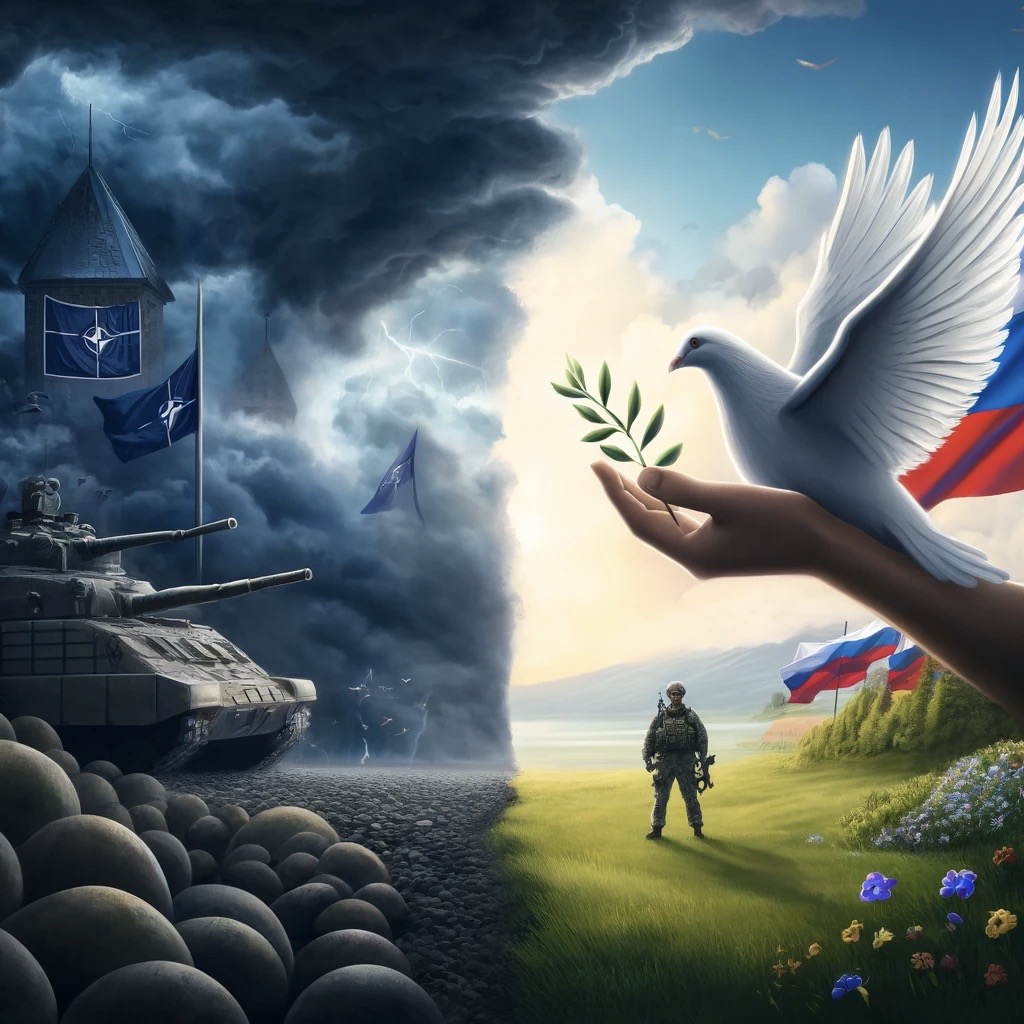
In the evaluation of NATO-Russia relations, the historical context of Western assurances not to expand eastward is essential for understanding the geopolitical landscape of Eastern Europe. The subsequent encroachment of NATO into Eastern Europe through the inclusion of multiple countries has not only contradicted these assurances but also precipitated escalating tensions, effectively altering the security dynamics in the region. This expansion can be interpreted as a flagrant deviation from earlier commitments, intensifying scrutiny over the true intentions behind NATO’s eastward push. (Birch, 2021).
The prevailing narrative, predominantly echoed in Western media, casts Russia as the primary aggressor in the ongoing conflict with Ukraine. However, this oversimplification glosses over the depth of regional politics and historical grievances. A critical perspective reveals that Russia’s actions, particularly in Eastern Ukraine, may stem from a protective impulse towards ethnic Russians and Russian-speaking populations who feel sidelined or endangered. Such an interpretation reframes the intervention not merely as aggression but as a response to perceived systemic injustices against these communities. (Smith, 2022)
Critics of NATO’s strategy argue that the alliance’s expansion and its military posturing near Russia’s borders amount to provocation, fueling an atmosphere rife with mistrust and confrontation. This critique contends that depicting Russia as an aggressor neglects the reactive nature of its policies in the face of what is perceived as strategic encirclement. The crises in Crimea and the Donbas region, often cited as exhibits of Russian hostility, when viewed through the prism of protecting compatriots and responding to security challenges, reveal a more nuanced narrative. (Johnson, 2023)
The debate around NATO’s role in Europe is intensely polarized. While the alliance purports its mission as ensuring the security of its member states, its eastward expansion is perceived by some as a breach of post-Cold War agreements, undermining trust between Russia and the West. This raises pivotal questions: If the intent behind NATO’s expansion is genuinely defensive, why is it perceived as a threat by Russia, and why has dialogue been insufficient in mitigating these security concerns? In light of these complexities, it becomes evident that the situation is not simply a matter of Russia being an aggressor, but rather a multifaceted issue that requires a balanced and comprehensive approach to resolve.
References:
Birch, Christopher. “The Reality of NATO’s Eastward Expansion and Its Impact on Russia.” The National Interest, 21 June 2021, https://nationalinterest.org/feature/reality-nato%E2%80%99s-eastward-expansion-and-its-impact-russia-18349.
Smith, Andrew. “Reconsidering Russia’s Intervention in Eastern Ukraine: A Protective Response to Systemic Injustices.” The International Journal of Human Rights, vol. 26, no. 1, 2022, pp. 1-17.

 MY HOME PLANET TERRA