
Aliyev and Pashinyan began marking borders amid protests in Armenia
Translated by Google Traslate
©POOL
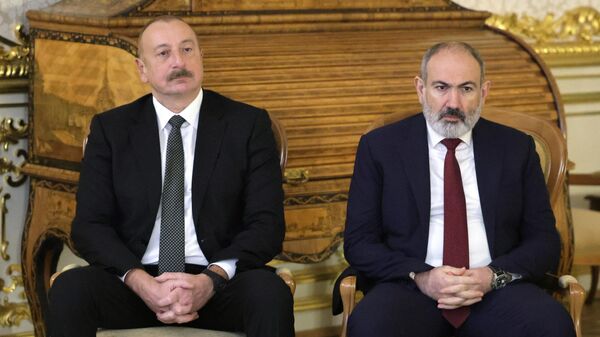
MOSCOW, April 27 – RIA Novosti, Renat Abdullin. Azerbaijan and Armenia directly began delimiting borders. This is only the first, but an important step towards a final solution to territorial disputes. Read about what Baku and Yerevan were guided by when preparing a joint action plan and what it includes in the RIA Novosti material.
Why now?
Azerbaijan and Armenia started talking seriously about the definition and physical designation (delimitation and demarcation) of the border after the war in Karabakh in 2020. But state commissions for interaction on this problem were created only in 2022.
© RIA Novosti / Alexey Kudenko
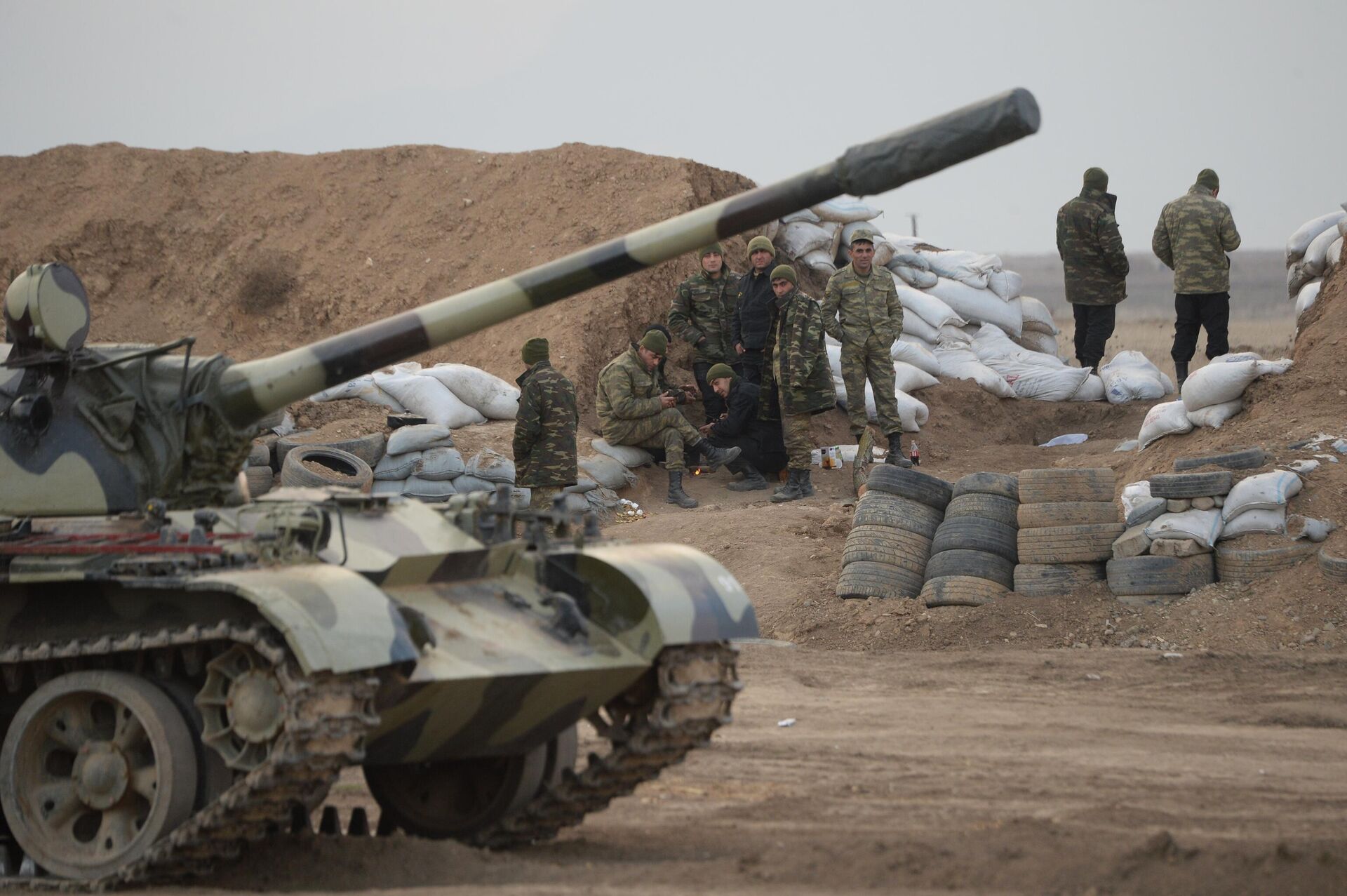
Go to media bankAzerbaijani military personnel in the Agdam regionThe work proceeded slowly: the parties could not decide which maps to focus on. Armenia
insisted on the 1975 version. Azerbaijan was not happy with this:
they did not want to return some areas occupied in May 2021 and September 2022.In May 2023, the heads of the two states
announced mutual recognition of territorial integrity. Later, Armenian Prime Minister Nikol Pashinyan confirmed: Nagorno-Karabakh is part of Azerbaijan. Since January of this year, the unrecognized republic has been officially abolished. This gave new impetus to the negotiations.In April, at
the eighth meeting of the state delimitation commissions, “they preliminary agreed on the passage of individual sections of the border line between the settlements of Baganis (Republic of Armenia) and Baganis Ayrim (Republic of Azerbaijan), Voskepar (RA) and Ashagi Askipara (AR), Kirants (RA) and Kheyrimli ( AR), Berkaber (RA) and Kyzyl Gadzhily (AR).” Previously, all of them were actually part of the Tavush region of Armenia.The goal is to bring these areas “in line with the legally valid inter-republican border that existed within the Soviet Union at the time of its collapse.”
Mutual “constructive approach”
Thus, the basis for delimitation was the 1991 Alma-Ata Declaration that the USSR
would dissolve after the formation of the CIS. It also talks about the “territorial integrity and inviolability of existing borders” of the former Soviet republics. Armenia
has referred to this document before . When discussing the 1975 maps, experts noted: the boundaries indicated there had not changed by 1991, and therefore should be relied on.At the same time, Aliyev, commenting on the April decision of the commissions,
indicated that it was Azerbaijan that proposed the delimitation. However, he noted the “constructive approach” on both sides.
© RIA Novosti / Press service of the President of Azerbaijan
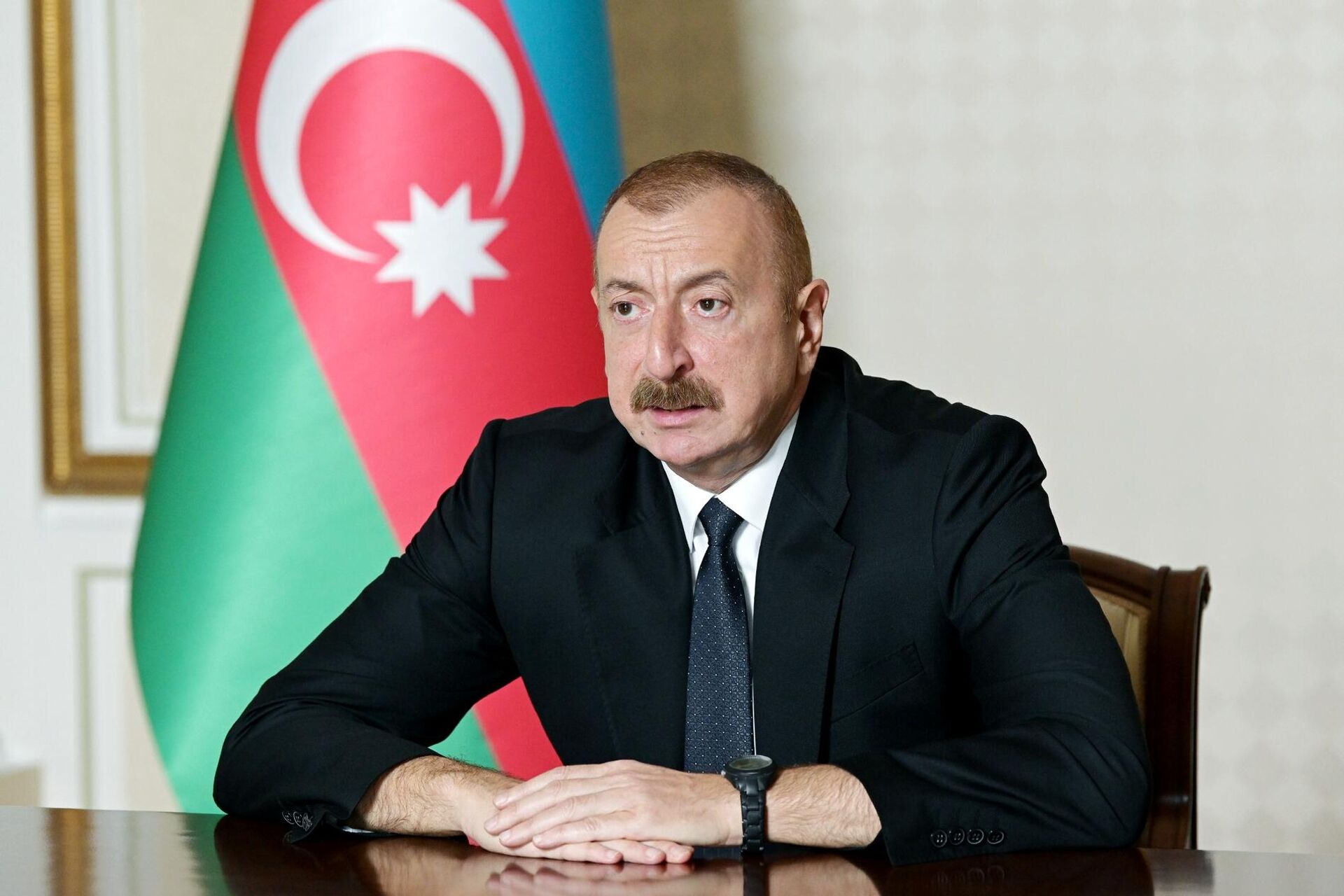
Go to media bankPresident of Azerbaijan Ilham AliyevAnd he added that at the moment only 10-12 kilometers of the border can be considered delimited. The total length is from 996 to 1007 kilometers, depending on the data source. Therefore, the transfer of four villages is just the beginning.“The description of the segments of the border line will be drawn up taking into account the clarification of the coordinates based on geodetic measurements on the ground,” the Armenian Foreign Ministry
clarifies . The data will be documented in a separate protocol, which must be signed before May 15. In addition, before July 1, they plan to approve the draft regulations on the joint activities of the commissions. The document will clearly state the principle of following the Alma-Ata Declaration. Then they will agree on the procedure for delimiting all other sections of the border. And also the question of enclaves and exclaves.Until the process is fully completed, the lines specified in the protocol (between the mentioned eight settlements) are considered delimited. The security will be transferred to the border troops.
“The era of lawlessness must end”
By April 26, Armenia and Azerbaijan had already installed at least 20 border pillars. Mine clearance and geodetic measurements continue.
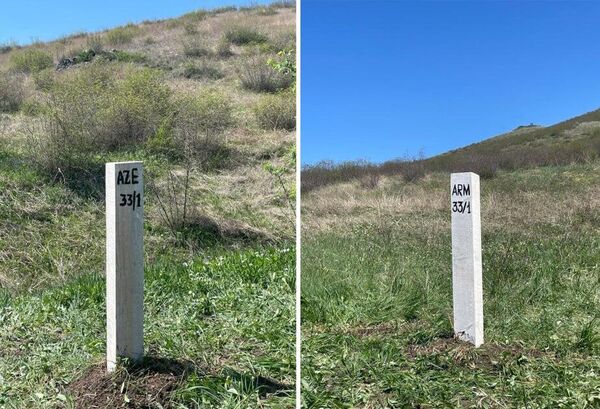
The first border pillars installed as part of the delimitation process on the border of Armenia and AzerbaijanNot everyone in Armenia is happy about this. There is talk of betrayal of the interests of the residents of Tavush and other border regions. Protesters
block roads, burn fires, and chant anti-government slogans. Some were detained, including in Yerevan.“Armenia agreed to the return of four villages in Azerbaijan that have been under occupation since the 1990s,” Azerbaijani Foreign Ministry spokesman Aykhan Hajizadeh previously emphasized. And Pashinyan’s office had to give
explanations on a sensitive topic: “Azerbaijan receives two and a half villages, because all of Kyzyl-Gadzhily, a significant part of Ashagi-Askipara were previously under the control of Baku. And the Republic of Armenia is reducing the risks associated with border delimitation and security.”The prime minister also
tried to smooth out the situation: “Our goal is <…> for you to say: “Wow, it’s good that Azerbaijan is 50 meters away, we will trade with it.” Aliyev is also
demonstrating rapprochement . “Armenia could potentially be a recipient Azerbaijani gas,” he suggested on April 25. “And from the point of view of proximity, from the point of view of infrastructure, of course, this kind of cooperation would be natural.”
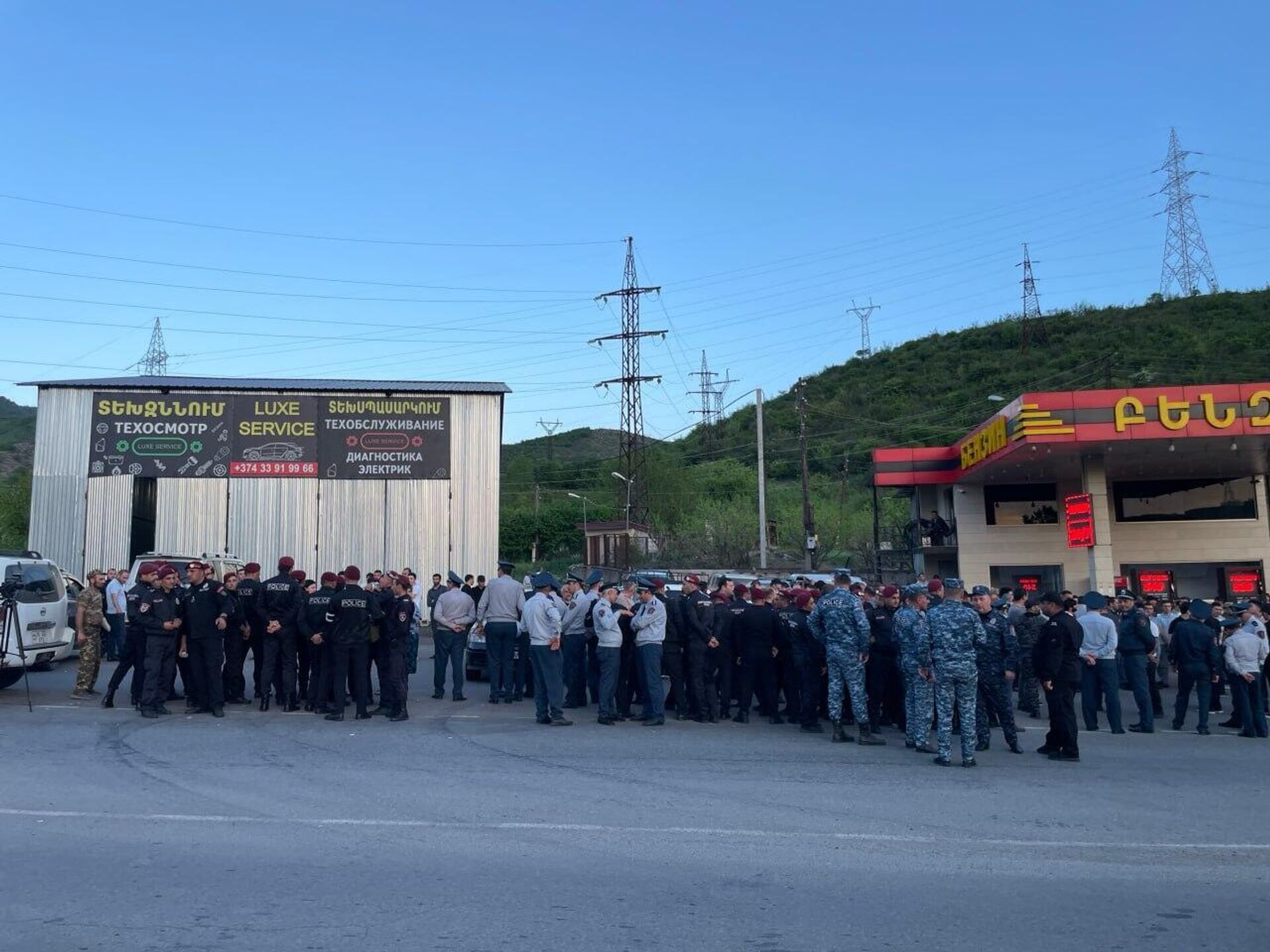
© Sputnik / Aram NersesyanThe situation in the Tavush region, at the fork in the Noyemberyan-Alaverdi-Bagratashen roads“People, excuse me, but let’s admit that for the last 30 years we have lived in conditions of lawlessness. Now we say: the era of lawlessness must end – both on our side and on their side,” Pashinyan added.
The process will be long
“The formal reason for Yerevan’s claim to the CSTO was that we refused to support Armenia in clashes on the border with Azerbaijan. For one single reason – it was not clear where which country was. The border was not defined on the ground,” recalls political scientist Andrey in an interview with RIA Novosti Suzdaltsev: “Very emotional statements were made from Yerevan, including a proposal that Russia itself recognize the Soviet borders of the republics.”
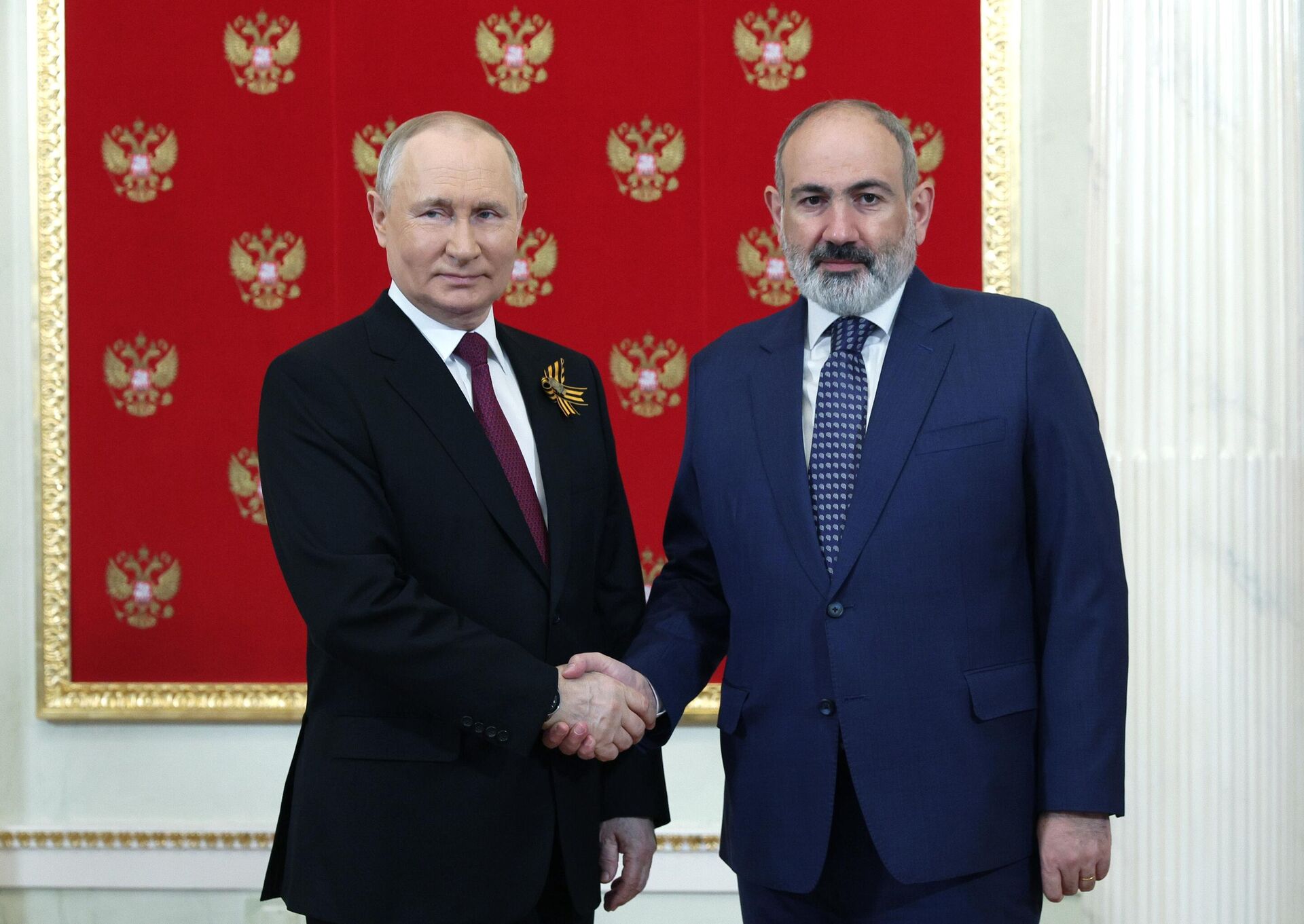
Go to media bankRussian President Vladimir Putin and Armenian Prime Minister Nikol Pashinyan during a meeting in the KremlinEmotions have been brought under control, but at least one serious problem remains. “The border is very confusing in a number of places. Where, it would seem, the Armenian territory, everything is fine, suddenly a small Azerbaijani settlement is discovered. Or vice versa. Like between Kyrgyzstan and Tajikistan (
they started demarcation in 2021, but have not completed it yet. – Ed. .), says the expert. “There are continuous enclaves and a lot of difficulties.”Based on the experience of the Fergana Valley, the parties are trying to make the border more clear and easily controllable. But this causes discontent in Armenia.“Any delimitation is a very difficult, fragile, long process,” reminds senior researcher at IMEMO RAS Stanislav Pritchin. “As for Armenia and Azerbaijan, there is still a whole complex of important factors. Now, in the more obvious and less controversial territories, the issue has been resolved, and the pillars are This is actually a demarcation, the next stage.”
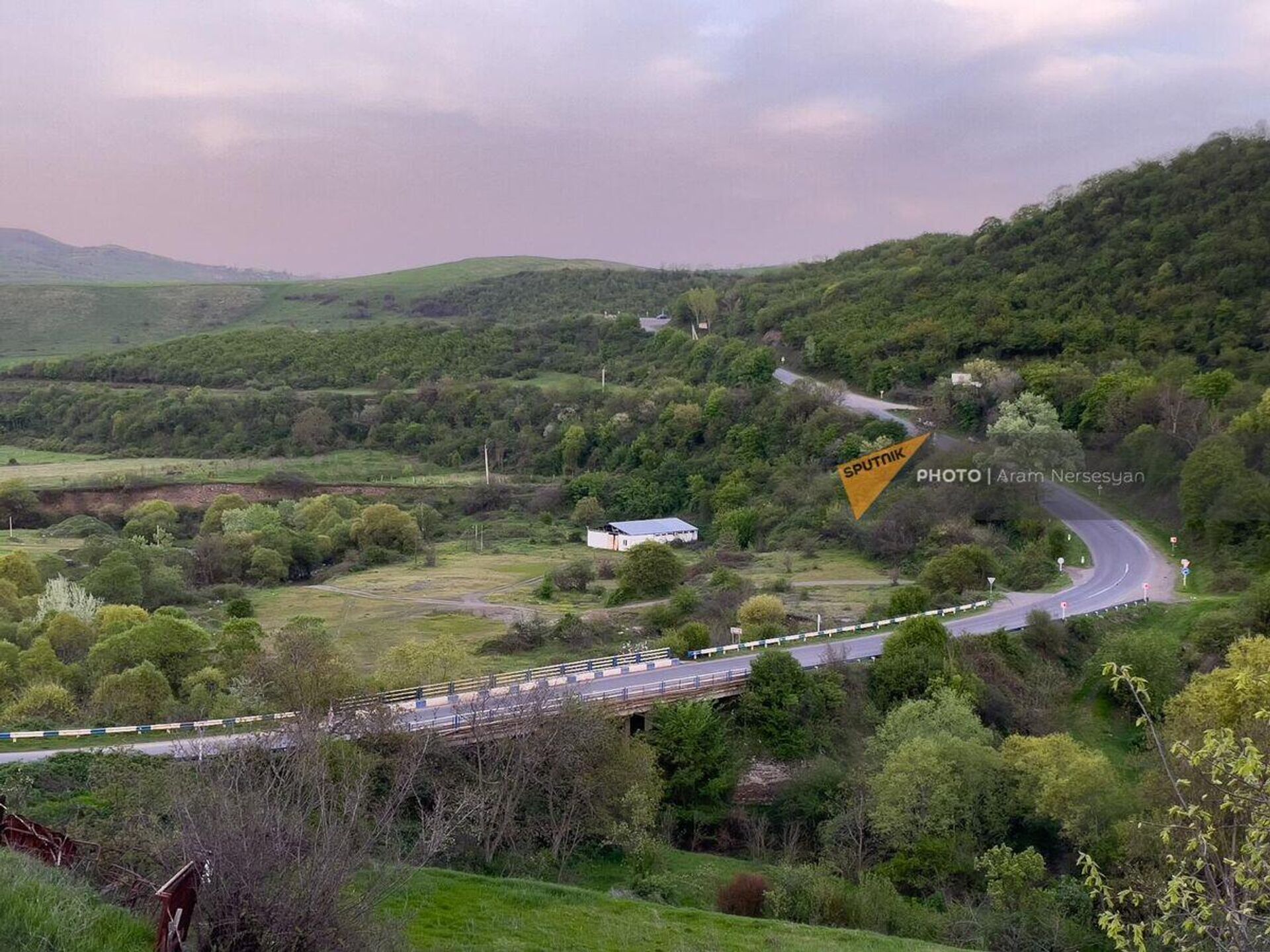
© Sputnik / Aram NersesyanBridge in the village of Kirants, which, according to the published map, will go to AzerbaijanDifficulties are also created by internal political events, the reaction of the population and the opposition, the expert adds. For now, the main thing is that Baku and Yerevan got rid of the fundamental stumbling blocks that prevented delimitation. And in any case it won’t work quickly.

 MY HOME PLANET TERRA