
A Joyous Occasion for the Irish and Irish Americans

“Green Chicago River on Saint Patricks Day 2009” by Mike Boehmer from Chicago, IL, USA is licensed under CC BY 2.0 
 .
.
St. Patrick’s Day is more than just a celebration of Irish heritage—it’s a day of joy, unity, and cultural pride for millions of Irish and Irish Americans. Every year on March 17, people around the world don green attire, enjoy festive parades, and honor the legacy of Ireland’s patron saint. Whether you have Irish ancestry or simply enjoy the vibrant traditions, this holiday is a reminder of the deep and lasting impact of Irish culture (O’Connor 2015).
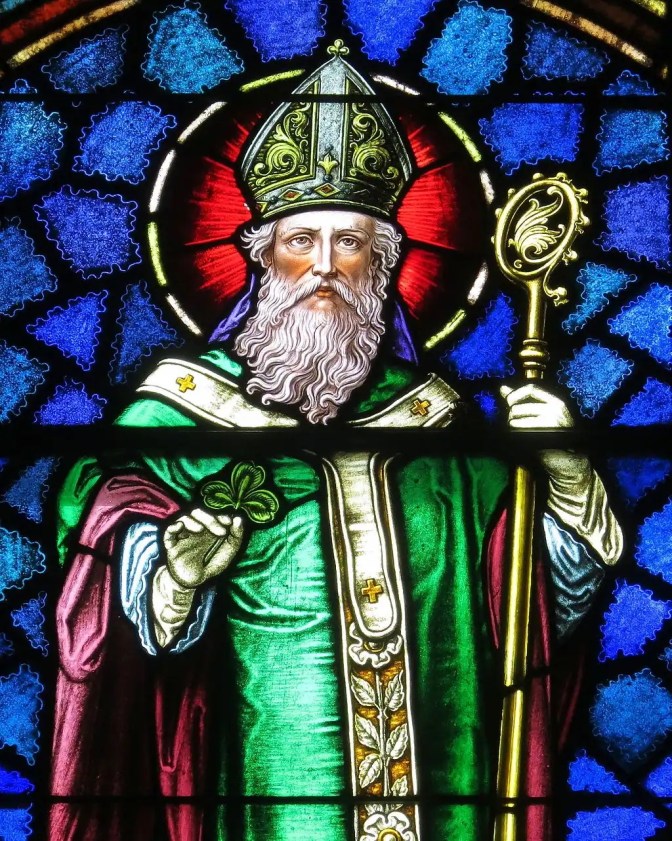
Who Was St. Patrick?
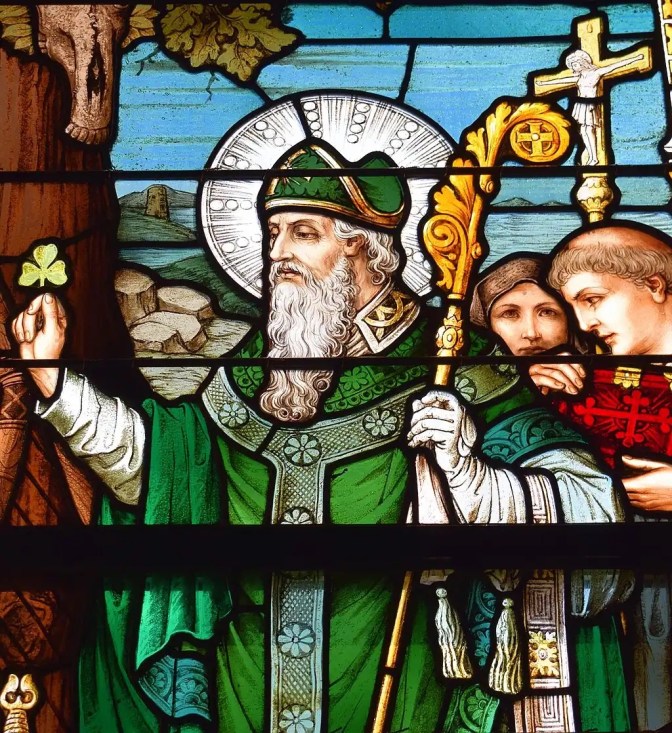
St. Patrick, the patron saint of Ireland, was born in Roman Britain in the late 4th or early 5th century. As a teenager, he was kidnapped by Irish raiders and taken to Ireland as a slave. After several years of captivity, he escaped but later returned to Ireland as a Christian missionary. St. Patrick is credited with spreading Christianity across Ireland and is famously associated with driving out snakes from the island—though this legend is more symbolic than historical. His teachings and legacy made him a central figure in Irish culture, leading to the annual celebration of his life and work on March 17, the date of his death (O’Connor 2015).
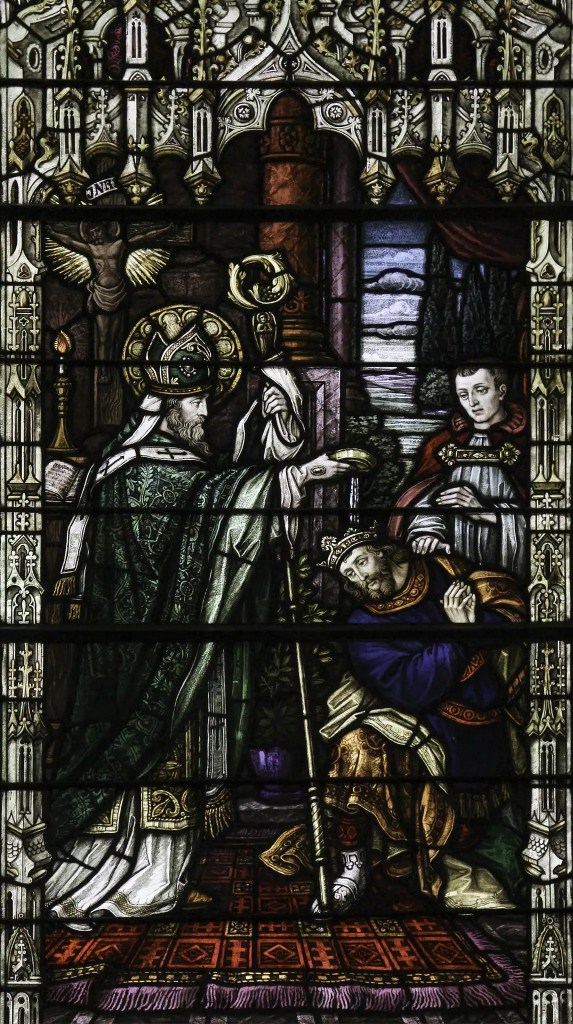
“Saint Patrick baptising” by Lawrence OP is licensed under CC BY-NC-ND 2.0 
 .
.

“Pope Francis at Saint Patricks Cathedral NYC” by Aleteia Image Department is licensed under CC BY-NC-ND 2.0 .
Why St. Patrick’s Day Is Important in the U.S.

“Saint Patricks Day in NYC 2014 !” by Aleteia Image Partners is licensed under CC BY-NC-ND 2.0 .
St. Patrick’s Day is not just an Irish holiday; it holds significant meaning in the United States. The first recorded St. Patrick’s Day parade took place in New York City in 1762, organized by Irish soldiers serving in the British army. Over time, as waves of Irish immigrants arrived in the U.S. during the 19th century—especially during the Great Irish Famine—St. Patrick’s Day became a symbol of Irish-American identity and resilience (Smithsonian Magazine 2021).
Today, the largest St. Patrick’s Day celebrations happen in cities like New York, Boston, and Chicago, where the Chicago River is dyed green each year. The holiday has grown beyond its religious roots to become a major cultural event, celebrated by people of all backgrounds (Chicago Tribune 2023).
The Influence of Irish Immigrants on American Culture
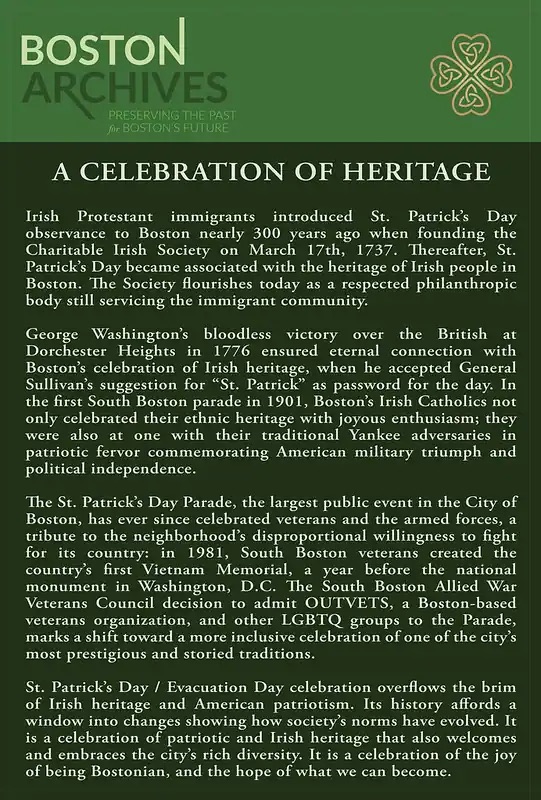
“The Irish and Boston: An Immigrant Saga” by Boston City Archives is licensed under CC BY-SA 2.0  .
.

“Memorial to Irish immigrants” by scsmith4 is licensed under CC BY-NC-ND 2.0 .
Irish immigrants played a significant role in shaping American culture. From politics to labor movements, their contributions have been substantial. Many Irish immigrants worked in infrastructure, building roads, bridges, and railroads. Others became influential in law enforcement, education, and business. Several U.S. presidents, including John F. Kennedy and Joe Biden, have proudly embraced their Irish heritage (Irish Times 2022).
One fascinating yet often overlooked aspect of Irish influence in America is its impact on the English language. Due to large-scale Irish immigration, American English has inherited many linguistic elements from Irish English (Filppula 2000).
How Irish English Shaped American English
Many people may not realize that the American accent, especially in certain regions, shares similarities with Irish English. Some linguists argue that features of Irish pronunciation influenced American speech patterns in a way that distinguishes American English from British English. One key similarity is rhoticity—the pronunciation of hard “r” sounds at the end of words. While the English accent developed into a non-rhotic form (where the “r” sound is often dropped), both Irish and American English kept the rhotic pronunciation, leading to similarities in speech (McCafferty 2002).
Additionally, certain phrases and grammatical structures in American English have roots in Irish speech patterns. Expressions like “I’m after finishing my work” (meaning “I just finished my work”) come from Hiberno-English, a version of English influenced by the Irish language. Other words like “shenanigans” and “whiskey” also trace back to Irish origins (Hickey 2007).
This linguistic connection is a testament to the deep influence that Irish immigrants had on American culture, extending beyond traditions and celebrations into everyday language (Dolan 2004).
St. Patrick’s Day Traditions: Ireland vs. The U.S.
While both Ireland and the United States celebrate St. Patrick’s Day, the traditions vary significantly. In Ireland, the holiday has historically been a more solemn religious occasion, though in recent decades, major cities like Dublin have embraced large parades and festivities similar to those in the U.S. (Irish Times 2022).
In the United States, St. Patrick’s Day is widely celebrated with grand parades, lively music, and plenty of food and drinks. Corned beef and cabbage, a dish commonly associated with the holiday in America, actually originated with Irish immigrants who adapted their diet to available ingredients in their new homeland. Green beer, a novelty popular in American celebrations, is virtually unheard of in Ireland (Smithsonian Magazine 2021).
One of the most famous U.S. traditions is the dyeing of the Chicago River, which started in 1962. This vibrant display of Irish pride is just one example of how the holiday has evolved into a widely recognized cultural event (Chicago Tribune 2023).
Happy St. Patrick’s Day!
Whether you’re attending a parade, enjoying traditional Irish music, or simply wearing a bit of green, St. Patrick’s Day is a time to celebrate Irish heritage and the lasting contributions of Irish immigrants. It’s a day to recognize the unity, resilience, and joy that Irish culture has brought to the world. So, raise a glass, enjoy the festivities, and as the Irish say, “Sláinte!” (Cheers!)
St. Patrick’s Day Parades in the U.S. (2025)
Here are some of the major St. Patrick’s Day parades happening across the United States in 2025:
1. New York City, New York
- Estimated Attendance: Approximately 2 million spectators
- Details: Established in 1762, it’s the world’s oldest and largest St. Patrick’s Day parade, featuring around 150,000 participants marching along Fifth Avenue.
- Date: Monday, March 17, 2025, at 11:00 AM
- Website: nycstpatricksparade.org
2. Chicago, Illinois
- Estimated Attendance: 800,000 – 1 million spectators
- Details: Renowned for dyeing the Chicago River green, followed by a grand parade through the city.
- Date: Saturday, March 15, 2025
- Website: chicagostpatricksdayparade.org
3. Boston, Massachusetts
- Estimated Attendance: 600,000 – 800,000 spectators
- Details: A historic parade deeply rooted in Irish-American culture, attracting hundreds of thousands of attendees.
- Date: Sunday, March 16, 2025, at 1:00 PM
- Website: southbostonparade.org
4. Savannah, Georgia
- Estimated Attendance: Approximately 500,000 spectators
- Details: One of the largest and oldest St. Patrick’s Day celebrations in the country, featuring a variety of family-friendly events and a grand parade.
- Date: Monday, March 17, 2025
- Website: savannahsaintpatricksday.com
5. Philadelphia, Pennsylvania
- Estimated Attendance: Approximately 20,000 participants with thousands of spectators
- Details: One of the oldest parades in the nation, dating back to 1771, featuring marching bands, Irish associations, and dance groups.
- Date: Sunday, March 16, 2025
- Website: phillyparade.com
6. San Francisco, California
- Estimated Attendance: Over 100,000 spectators
- Details: Celebrating its 174th annual parade in 2025, featuring numerous floats, Irish dance troupes, and marching bands.
- Date: Saturday, March 15, 2025
- Website: stpatricksday.sf.org
7. Cleveland, Ohio
- Estimated Attendance: Up to 500,000 spectators
- Details: Celebrating its 175th anniversary in 2025, the parade features floats, music, dancing, and bands.
- Date: Monday, March 17, 2025, at 1:04 PM
- Website: stpatricksdaycleveland.com
8. Pittsburgh, Pennsylvania
- Estimated Attendance: Approximately 200,000 spectators
- Details: Features numerous marching bands, floats, and Irish organizations, making it one of the largest parades in the country.
- Date: Saturday, March 15, 2025, at 10:00 AM
- Website: pittsburghstpatricksdayparade.com
9. Denver, Colorado
- Estimated Attendance: Over 200,000 spectators
- Details: A longstanding tradition featuring floats, marching bands, and cultural displays.
- Date: Saturday, March 15, 2025, at 9:30 AM
- Website: denverstpatricksdayparade.com
10. Milwaukee, Wisconsin
- Estimated Attendance: 40,000 – 80,000 spectators
- Details: The 57th annual parade organized by the Shamrock Club of Wisconsin, featuring numerous Irish dance schools and pipe bands.
- Date: Saturday, March 15, 2025, at 12:00 PM
- Website: shamrockclubwis.com
References
Filppula, Markku. “The Influence of Irish English on American English.” English World-Wide, vol. 21, no. 1, 2000, pp. 51–86. https://benjamins.com/catalog/eww.21.1.03fil.
Hickey, Raymond. Irish English: History and Present-Day Forms. Cambridge University Press, 2007. https://www.cambridge.org/core/books/irish-english/1C13D0A04A9C3E8F6F7EC6E09E6CFB6B.
McCafferty, Kevin. “Irish Influence on American English: Myths and Reality.” Journal of English Linguistics, vol. 30, no. 2, 2002, pp. 103–123. https://journals.sagepub.com/doi/10.1177/007542420203000202.
Dolan, Terence Patrick. A Dictionary of Hiberno-English: The Irish Use of English. Gill & Macmillan, 2004. https://gillbooks.ie/irish/use-of-english.
O’Connor, Joseph. St. Patrick and the Origins of the Holiday. Dublin Historical Society, 2015. https://dublinhistory.ie/st-patrick-holiday-origins.
“Chicago River Dyed Green for St. Patrick’s Day: A Longstanding Tradition.” Chicago Tribune, March 17, 2023. https://www.chicagotribune.com/st-patricks-day-river-dyeing.
“The First St. Patrick’s Day Parade in America.” Smithsonian Magazine, March 14, 2021. https://www.smithsonianmag.com/history/first-st-patricks-day-parade-america-180977258.
“St. Patrick’s Day Celebrations in Ireland vs. the U.S.” Irish Times, March 17, 2022. https://www.irishtimes.com/life-style/st-patricks-day-ireland-vs-us.

 MY HOME PLANET TERRA
_-_stained-glass,_Saint_Patrick_detail.jpg)