On RT: Unraveling the ICC’s Role in the Gaza-Israel Conflict

On RT: Unraveling the ICC’s Role in the Gaza-Israel Conflict

On Rt:
Robert Inlakesh discusses the ICC’s actions in relation to the Gaza-Israel conflict, including the prosecutor’s warning on impeding aid, a focus on Hamas attacks, criticism from American attorney Stanley Cohen, the ICC’s investigation into war crimes in Palestine, accusations of Israeli apartheid, slow progress, jurisdiction disputes, bias concerns, alternative prosecution options, and the ongoing crisis in Gaza. Continue reading On RT: Unraveling the ICC’s Role in the Gaza-Israel Conflict
Escalating Israel-Hamas Conflict.

Escalating Israel-Hamas Conflict.

In the ongoing Israel-Hamas conflict, Israel’s intensified attacks on southern Gaza have led to a rising death toll and widespread destruction. Despite international appeals to protect civilians, the conflict persists, with Israel targeting Hamas operatives. Evacuation orders cause panic among Gazans, particularly in the crowded south. The U.S. urges civilian safeguarding, while Hamas rejects further hostage swaps without conflict resolution. Overall, the toll includes increased deaths, numerous casualties, and renewed attention to hostages. Continue reading Escalating Israel-Hamas Conflict.

Analytical-Gaza

Analytical-Gaza

In 2005, Ariel Sharon’s Gaza Disengagement strategically relocated Jewish settlers, aiming for more effective military operations and reduced risks to Israeli citizens. The forced evacuation facilitated unbridled bombing campaigns, shifting regional dynamics and enabling targeted bombings without risking Israeli casualties. Sharon’s plan challenges the narrative of fostering peace, emphasizing its calculated nature for long-term military advantage. Continue reading Analytical-Gaza

Geopolitics:Ukraine-UK

Geopolitics:Ukraine-UK

On SputnikGlobe:
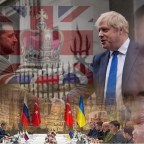
UK media outlets have remained silent on claims by Ukrainian lawmaker David Arakhamia that former UK Prime Minister Boris Johnson convinced Kiev not to negotiate with Moscow in 2022. This alleged interference has led to a continuation of conflict, with tragic consequences for Ukraine. Despite the gravity of these assertions, a search of British outlets yields no results on this topic, raising questions about an information blackout. Continue reading Geopolitics:Ukraine-UK

Christian Zionism

Christian Zionism

On Aljezeera:
The article discusses a shift in support for Israel among young US evangelical Christians. It highlights the growing divide between older evangelicals, who staunchly support Israel, and younger ones, who are more likely to question this stance and express sympathy for Palestinians. This change is attributed to various factors, including increased exposure to different perspectives on social media. Continue reading Christian Zionism

Zionist Evangelism

Zionist Evangelism

On MSN News:
A significant gathering of American people of the Jewish faith in Washington for the March for Israel rally aimed to express support for Israel, call for the release of hostages held by Hamas, and stand against antisemitism. John Hagee, a pastor with a controversial history, unexpectedly participated, leading to objections and highlighting the nuanced relationship between supporting Israel and fighting antisemitism. Hagee’s presence prompted discussions on the rally’s intended message, raising concerns about the alignment of his views with peace and security interests. This event underscores the complexity of allegiances in Israeli politics, prompting reflection on the intersection of support for Israel and combating antisemitism. Continue reading Zionist Evangelism

Op-ed on Israeli Apartheid.

Op-ed on Israeli Apartheid.

On RT:
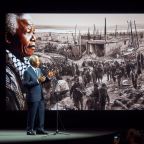
Mayibuye Mandela, the great-grandson of Nelson Mandela and a South African political activist, spoke exclusively to RT, expressing gratitude for Palestinian support during apartheid. Criticizing perceived Israeli impunity, he attributed it to strong American backing and drew parallels between the Israel-Hamas conflict and apartheid. Advocating sanctions against Israel, including embassy removal and product bans, he called for arming Palestinians. Mayibuye clarified South Africa’s issue lies with Zionists, not Jewish people, stressing the need for a two-state solution. Continue reading Op-ed on Israeli Apartheid.

Zelensky on Time?

Zelensky on Time?

Op-ed
President Zelensky’s struggle in Ukraine’s war has led to waning support and growing isolation. As the war drags on and global interest wanes, he’s distancing himself from the West. Faced with corruption accusations, political challenges, and a deteriorating military situation, he stands on shaky ground. The latest geopolitical developments in the Middle East divert international attention and support, leaving Zelensky’s ambitions for victory in Ukraine increasingly distant. Continue reading Zelensky on Time?

Politics-Zelensky

Politics-Zelensky

On RT:
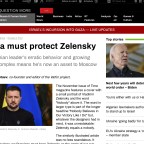
Time’s November issue portrays Zelensky as a disruptor, urging Russia to keep him in power for strategic advantage. His messianic self-perception, resistance to elections, and public popularity create a complex situation for Washington. The dismantling of traditional power structures in Ukraine further complicates the situation. The editorial explores the need for a more manageable leader and considers two options for the future, emphasizing the strategic advantage of Zelensky’s continued leadership. Continue reading Politics-Zelensky

The UN-Russia’s Stance on Israel

The UN-Russia’s Stance on Israel

On RT:
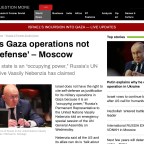
Russia’s UN representative argues that Israel, as an occupying power, cannot claim self-defense for its Gaza operations, citing an International Court of Justice advisory opinion from 2004. He criticizes the US and its allies for perceived hypocrisy and calls for a fair solution to the Palestinian problem based on UN Security Council resolutions. Continue reading The UN-Russia’s Stance on Israel

U.S. Foreign Policy-Middle East

U.S. Foreign Policy-Middle East

On RT:
The article discusses pro-Palestine demonstrators obstructing a US military supply vessel at the Port of Oakland. The demonstrators, led by the Arab Resource Organizing Center, believed the ship, MV Cape Orlando, was carrying military equipment destined for Israel. Despite efforts by a US Coast Guard negotiator to persuade them to leave, the protesters were removed from the ship later in the day, with some individuals detained. Their action aimed to influence US lawmakers considering substantial military aid for Israel. Similar pro-Palestine protests have taken place across the US, reflecting concerns surrounding the Gaza conflict and military aid. Continue reading U.S. Foreign Policy-Middle East