Viral Video of Harassment in Bethesda Sparks Outrage

A viral video shows a woman harassing a Mizrahi Jewish family in Bethesda, Maryland, thinking they were Muslim because the mother wore a hijab. The woman, later identified as 63-year-old Angela Visas, yelled anti-Muslim slurs, damaged the family’s car, and was arrested under Maryland’s hate-crime laws. Visas pleaded guilty to the charges in February 2024, showing how social media can make a real difference in holding people accountable for hate-driven actions. Continue reading Viral Video of Harassment in Bethesda Sparks Outrage

St. Patrick’s Day: A Celebration of Irish Heritage and Influence

St. Patrick’s Day: A Celebration of Irish Heritage and Influence

St. Patrick’s Day is a celebration of Irish heritage, unity, and cultural influence. From the legendary story of St. Patrick to the deep impact of Irish immigrants on America—including their influence on the English language—this holiday represents resilience and pride. Whether in Ireland or the U.S., parades, music, and traditions make March 17 a day of joy. Sláinte to all! Continue reading St. Patrick’s Day: A Celebration of Irish Heritage and Influence

Trump Ends Ukraine Aid: No More U.S. Funding for Zelenskyy’s War

Trump Ends Ukraine Aid: No More U.S. Funding for Zelenskyy’s War

In a pivotal shift in U.S. foreign policy, President Trump, during his address to Congress, announced the suspension of military aid to Ukraine, emphasizing an “America First” approach. This decision was underscored by CIA Director John Ratcliffe’s confirmation that the U.S. has halted intelligence sharing with Ukraine, citing the need for progress in peace negotiations with Russia. These developments mark a significant turning point in America’s involvement in the Eastern European conflict. Continue reading Trump Ends Ukraine Aid: No More U.S. Funding for Zelenskyy’s War

Breaking the Silence: Combatting the Bystander Effect Today

Breaking the Silence: Combatting the Bystander Effect Today

“A woman was stabbed to death while 38 people watched—and no one did a thing.”
This shocking crime became one of the most infamous examples of public indifference. But beyond the headlines lies an even more unsettling truth— one that reveals a disturbing flaw in human psychology that most of us don’t even realize we have.
What makes us hesitate when someone is in danger? What invisible force keeps us silent when action could save a life? And most importantly… if you were there that night, would you have really acted—or would you like to think you would?
The answer might surprise you.
Click to uncover the truth. Continue reading Breaking the Silence: Combatting the Bystander Effect Today

Comparisons to WWII: Russian Critique of Ukrainian Statements and Actions in Crimea

Comparisons to WWII: Russian Critique of Ukrainian Statements and Actions in Crimea

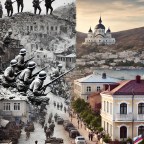
On SputnikGlobe: Maria Zakharova of the Russian Foreign Ministry responded to Mykhailo Podolyak’s statement on Crimea by equating it with the attitude of the Nazis during WWII. She further drew a parallel between ideology and modern methods along with US-made weapons. Donetsk official Igor Kimakovsky produces a link with Sunday’s cluster bomb attack at Sevastopol beach, killing four people and injuring 153 more, about past Ukrainian attacks against civilians that, like during the 2014 shelling in Zugres. He stressed that innocents have turned into the target time and again with U.S.-made ATACMS missiles. Continue reading Comparisons to WWII: Russian Critique of Ukrainian Statements and Actions in Crimea

The Future of Freedom of Speech in Europe: Ex-Austrian FM’s Alarming Observations

The Future of Freedom of Speech in Europe: Ex-Austrian FM’s Alarming Observations

On RT:
Former Austrian Foreign Minister Karin Kneissl has said that freedom of speech and fundamental liberties have disappeared in Europe and will not return soon. At the St. Petersburg International Economic Forum (SPIEF), Kneissl decried the fading of Europe’s constitutionalism, freedom, gender equality, security, and welfare state to have made the continent “lost its soul.” She turned to emphasize that Europe so far had meant freedom and equality before the courts, but these are currently missing. Kneissl warned that while the EU could recover from economic crises, the loss of democratic liberties could last for generations. The RT-hosted panel discussion ‘The Empire of Evil: Has the West Successfully Demonized Russia?’ featured speakers such as Scott Ritter and Tara Reade. Continue reading The Future of Freedom of Speech in Europe: Ex-Austrian FM’s Alarming Observations

Scott Ritter’s Remote Participation in RT Panel at SPIEF 2024

Scott Ritter’s Remote Participation in RT Panel at SPIEF 2024

SPIEF 2024: Scott Ritter on RT panel: Anyone challenging the US narrative on Russia is labeled an enemy.

Western governments need people to see Russia as a threat, targeting those who reveal the reality, said Scott Ritter at SPIEF. Ritter joined an RT-hosted panel remotely as his passport was seized by US authorities. The former US Marine and UN weapons inspector criticized US foreign policy, stating anyone opposing US security goals, including escalating tensions with Russia, is “deemed an enemy of the state – literally.” Continue reading Scott Ritter’s Remote Participation in RT Panel at SPIEF 2024

Modeled on the USSR. What Baku and Yerevan are banking on

Modeled on the USSR. What Baku and Yerevan are banking on

On RIA Novosti:
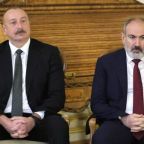
In Armenia, amid protests, leaders from Azerbaijan and Armenia initiated border talks, crucial for solving territorial disputes. Grounded in the 1991 Alma-Ata Declaration, these talks aim to uphold the inviolability of Soviet-era borders. Despite slow progress and disagreements over maps, preliminary agreements on border segments represent a step towards resolution, showcasing a constructive approach by both nations. Continue reading Modeled on the USSR. What Baku and Yerevan are banking on

Selective Outrage

Selective Outrage

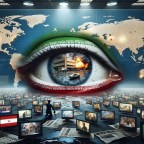
In a night that shattered peace in Damascus, Israeli airstrikes targeted Iran’s embassy, claiming seven lives. This act, met with muted Western responses, contrasts sharply with the immediate, global outcry against Iran’s retaliation. This incident not only escalates regional tensions but also deepens the narrative of bias in global diplomacy, highlighting a double standard in the international community’s reaction to conflicts involving Iran. Continue reading Selective Outrage